What 30 Years of Building Custom Furniture in Oklahoma Has Taught Me
When I first started building custom furniture in the mid 90s, most Oklahoma homes looked surprisingly similar. A house in Edmond looked a lot like a house in Norman, and a living room in Oklahoma City shared the same traditional aesthetic as one in Tulsa. Traditional furniture dominated the market, formal dining rooms were the standard, and homeowners generally chose from the same handful of commercial styles.
Thirty years later, the landscape has completely transformed. Today, I can drive down a single street in OKC and see modern homes, industrial interiors, contemporary spaces, and minimalist designs sitting side by side.
While Oklahoma’s design tastes have evolved dramatically, one thing hasn't changed: how people buy furniture. After putting my name on more than 4,000 pieces of furniture over the last three decades, I've noticed that most folks spend a lot of time thinking about how a piece looks, but very little time thinking about how it lives.
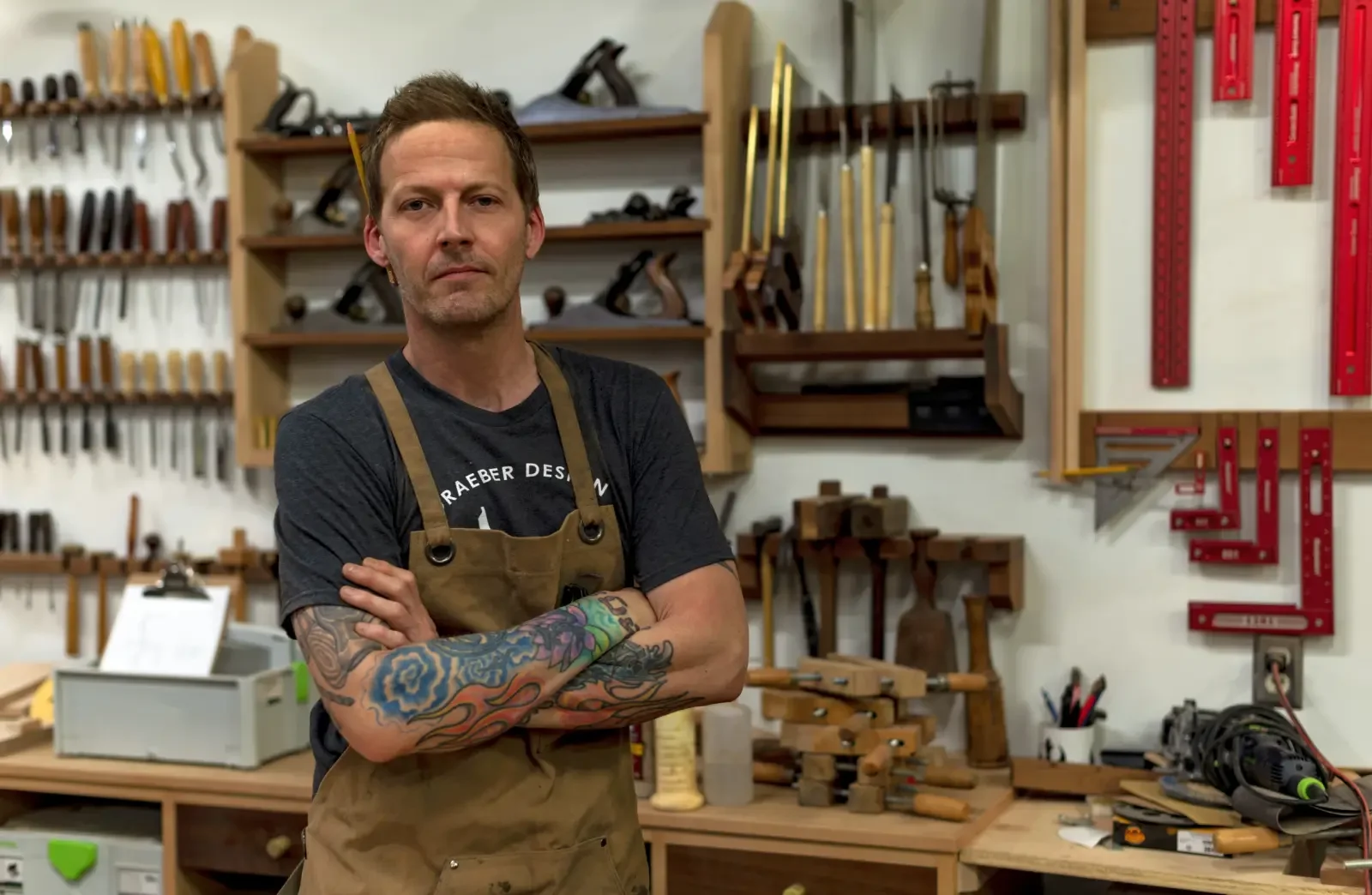
My fancy promotion photo. Check out that autistic smile…
The True Measure of Quality: Longevity Over Showroom Trends
It’s completely understandable that buyers focus on aesthetics. Furniture is an inherently visual medium. When someone is shopping for a custom dining table, they naturally notice the shape, the color, the base design, and the wood species. What they rarely consider, however, is what that table will look like ten, twenty, or thirty years down the road.
The longer I spend building, the more convinced I become that longevity is the single most important measure of quality, not fleeting styles, price tags, or viral trends.
Having repaired countless mass produced furniture and pieces built by others, I've seen firsthand where the shortcuts are taken. I’ve seen tables that looked incredible in a showroom but began failing a few years into their lifespan because they weren't properly engineered. I’ve seen finishes peel, tabletops break at the joints, and bases and legs loosen. These pieces were designed to impress a buyer under retail lights rather than survive decades of real family life.
Furniture is a lot like a house; most of what determines its lifespan is hidden from view. Nobody walks into a home and compliments the foundation, just as nobody walks into a dining room and compliments the mortise and tenon joinery of a dining table. But both are critical to structural integrity.
The Craftsman's Rule: After thirty years in this business, I’ve developed a firm stance: structural strength is ultimately more important than being pretty.
That statement usually surprises people. As a craftsman, I’m supposed to talk about beauty, design, and aesthetics. Those elements absolutely matter, but a beautiful table that structurally fails isn't a success. A table that still serves a family thirty years later is.
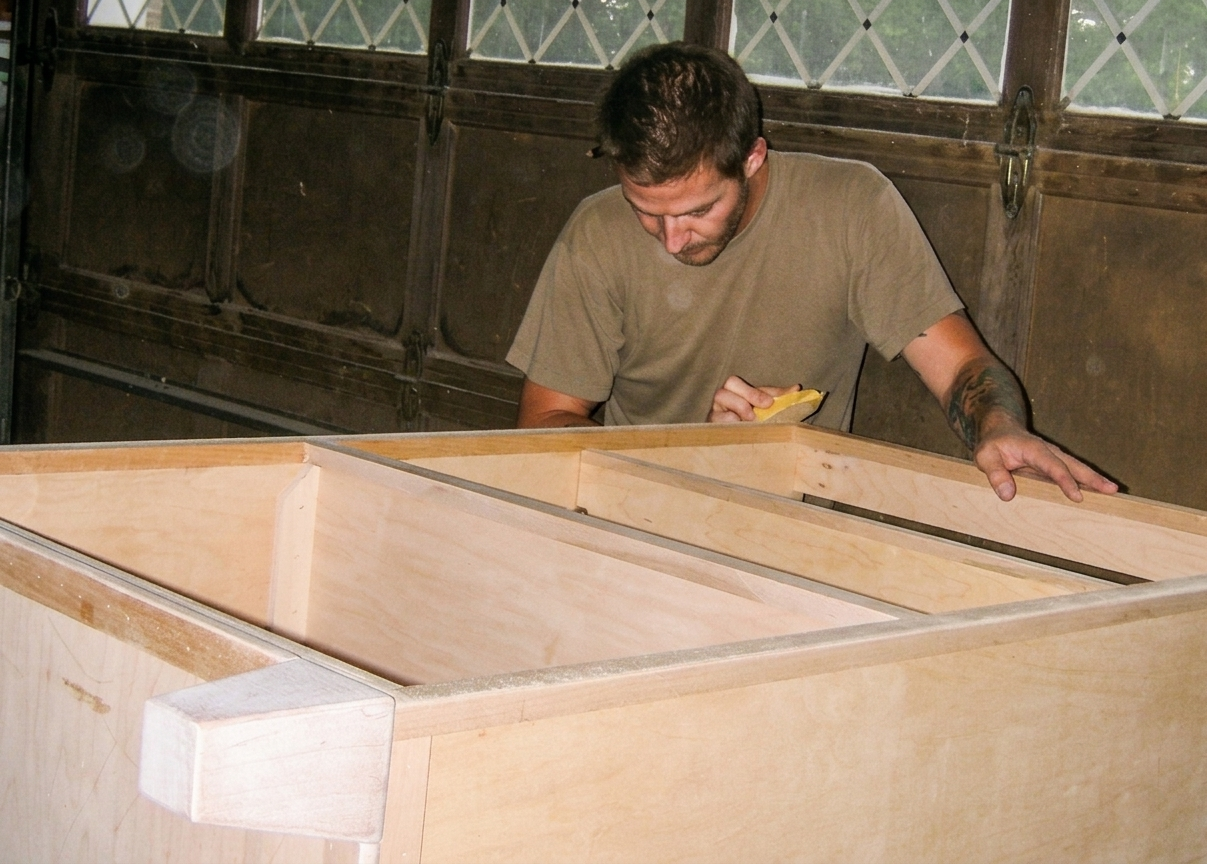
Building a custom bookcase in 1999
Why I Stepped Away from Live Edge and Epoxy River Tables
My commitment to longevity is why I often find myself disagreeing with popular furniture trends. Every decade produces a style that feels impossible to escape. Right now, some of the biggest requests in the industry are for live edge furniture and epoxy river tables.
I understand the appeal. They are dramatic, eye catching, and entirely unique creations that do well in other locations. However, after spending three decades working with native wood in the Midwest, I wouldn't choose either one for an Oklahoma home.
Wood movement is an absolute reality, and Oklahoma's brutal climate is notoriously harsh on furniture. The intense humidity swings throughout our seasons cause wood to constantly expand and contract. In the blistering, humid summers, the wood fibers swell; during our dry, freezing winters, they shrink.
Large, single slabs used in live edge pieces are particularly challenging to stabilize over long periods under these conditions. If a piece isn't meticulously engineered to accommodate these environmental changes, it will eventually pay the price. I’ve watched more that few makers start up, get popular, and then disappear after a few years when their pieces start coming apart. Experience has taught me that durability is always more valuable than novelty. The best furniture rarely screams for attention; it quietly does its job for decades.
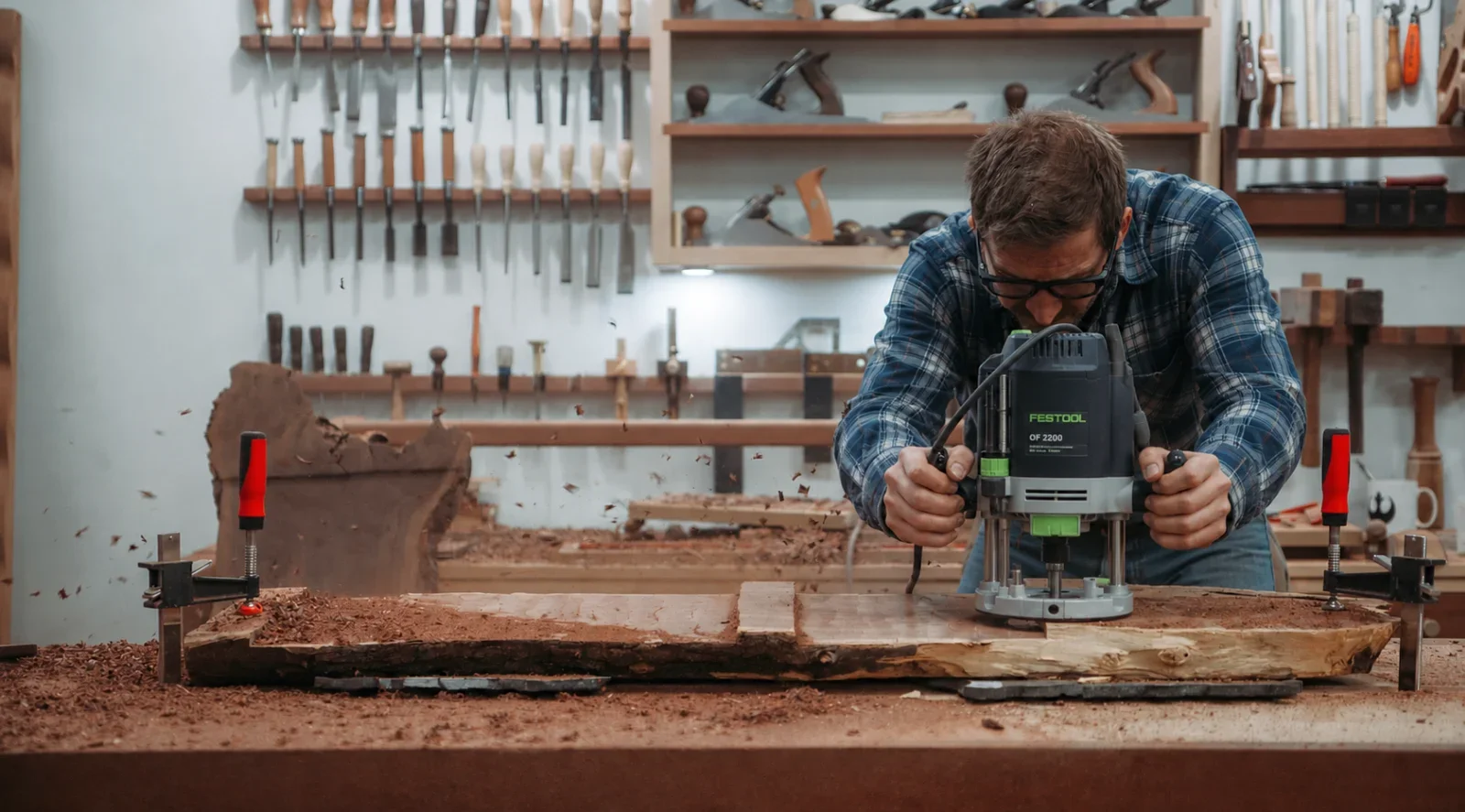
Building a one-off live edge bench for the Oklahoma City Museum of Art, made from black walnut from the workshop of former Governor/Senator Henry Bellman
More Than a Table: Crafting the Centerpiece of the Home
This philosophy has naturally shaped the types of projects I enjoy most. The vast majority of my work involves building custom dining tables, largely because they occupy a truly unique place in American homes. While most furniture serves a strictly utilitarian function, a dining table serves a higher purpose.
Families gather around it. Kids do their homework there. It’s where we celebrate birthdays, host holiday traditions, and hold some of the most important conversations a family will ever have. When I build a dining table, I’m not just assembling wood and glue; I’m building the backdrop for decades of human experience.
When prospective clients reach out, our conversations often follow a predictable path:
The Initial Focus: Initially, the discussion centers on price, which is natural because everyone has a budget.
The Long Term Shift: Once we pivot to talking about lifespan, repairability, and long term value, the entire perspective shifts.
The Custom Reality: People are often surprised to learn that custom, American made furniture isn't as unattainable as they assumed.
We've been conditioned to believe that custom is just a luxury buzzword. The reality is that a well built custom table made from solid hardwoods and traditional interlocking joinery will outlive multiple generations of mass produced, “staple and laminate” retail furniture. The financial calculation changes completely when you stop comparing the upfront purchase price and start comparing the years of reliable use.
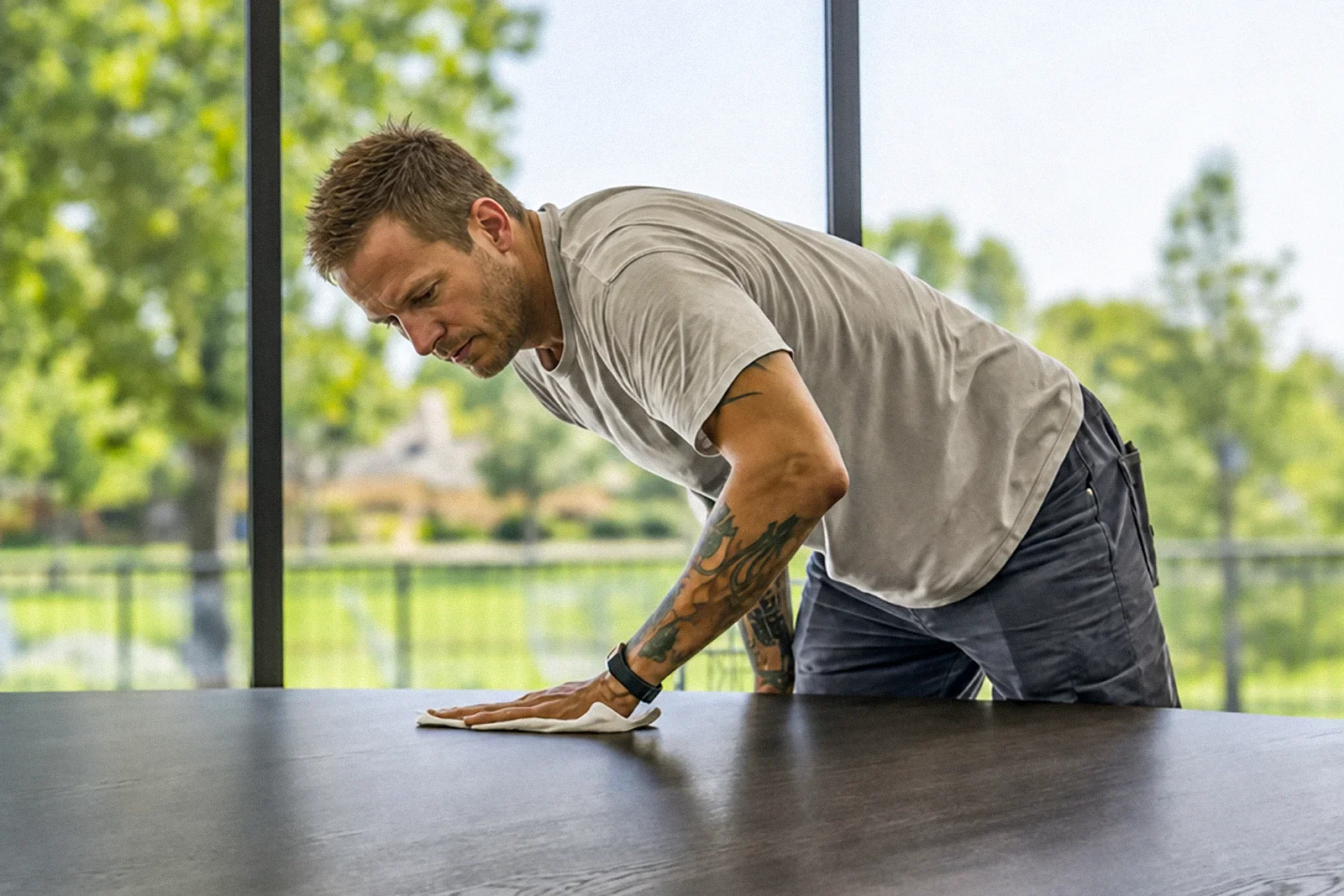
Seeing pieces in their forever homes is one of the best parts of the job!
The Future of Handbuilt Furniture in Oklahoma
Another lesson I’ve learned is that the best clients aren't necessarily wood experts; they are simply people who care about creating something deeply personal. Over the years, the question I hear most is: "Can I incorporate some of my own design ideas?"
When a client asks that, I know we're going to build something special. True custom furniture isn't a slightly modified catalog item with a different stain option. It is a piece designed specifically for the unique individuals who will live with it.
When I started in the '90s, homeowners wanted furniture that matched what their neighbors had. Today, Oklahomans are far more interested in creating spaces that reflect their personal stories. Custom furniture continues to thrive because it is personal, not because it is exclusive or trendy.
One of the oldest pieces I still track is a parsons style table I built for childhood friend thirty years ago, using locally sourced lumber. I refinished the table in 2017 and It’s still in daily use today by her daughters family. Still serving its purpose, and still anchoring a family's home. Nobody would call it fashionable by modern design standards, but it wasn't built to chase a trend or accumulate likes on social media. It was built to last, and three decades later, it does.
That is how I still define success after 4,000 pieces: build something honest, build something strong, and build something that a family will still love generations from now.
Let’s create a piece that can be part of your story.
Use the form below to tell me what you’re needing, and I’ll help make it a reality.