The Heart of the Home: A Guide to Dining Table Design
"A custom table shouldn't just fit the room; it should anchor the architecture of the space. We design for the person who values the quiet strength of a perfectly executed joint over the loudness of a trendy silhouette."
The dining table is more than just a piece of furniture; it's the heart of the home, a gathering place where families share meals, friends connect, and memories are made. As such, choosing the right dining table is a significant decision that impacts both the functionality and aesthetic of your dining space. From shape and size to material and style, here's a comprehensive guide to dining table design. Commissioning a custom dining table is an exercise in both geometry and lifestyle. It is likely the most used piece of furniture in your home, a place for work, conversation, and nourishment.
At Graeber Design, we focus on the intersection of structural integrity and refined aesthetics, moving away from fleeting trends and focusing on the timeless nature of solid wood.
When we move past the aesthetics of styles and look at pure design, the process becomes about three pillars: Proportion, Material, and Joinery.
1. Defining the Ideal Proportion
The first mistake in table design is ignoring the clearance zone. For a dining room to feel intentional rather than cramped, you need to account for the physical space required to move. A standard rule of thumb is to maintain at least 30-36 inches between the edge of the table and the nearest wall or piece of furniture.
In terms of personal space, each guest requires a minimum width of 22 inches to feel comfortable, though 26 inches is our preferred standard for high end custom builds, and 24 inches is the accepted standard. If you intend to have seating at the ends of the table, remember to factor in the leg placement so your guests aren't fighting for floor space with the table's base.
Sizing it Up:
The correct size is crucial for both comfort and functionality. Consider the dimensions of your dining room and the number of people you typically host.
Seating Capacity: Determine the minimum and maximum number of people you'll need to accommodate. As a rough guide:
4-6 people: 60-72 inch rectangular or 48-60 inch round table
6-8 people: 72-84 inch rectangular or 60-72 inch round table
8-10 people: 84-108 inch rectangular table
Extendable Options: If you occasionally host larger gatherings, consider an extendable dining table. These tables feature leaves that can be added to increase the seating capacity when needed.
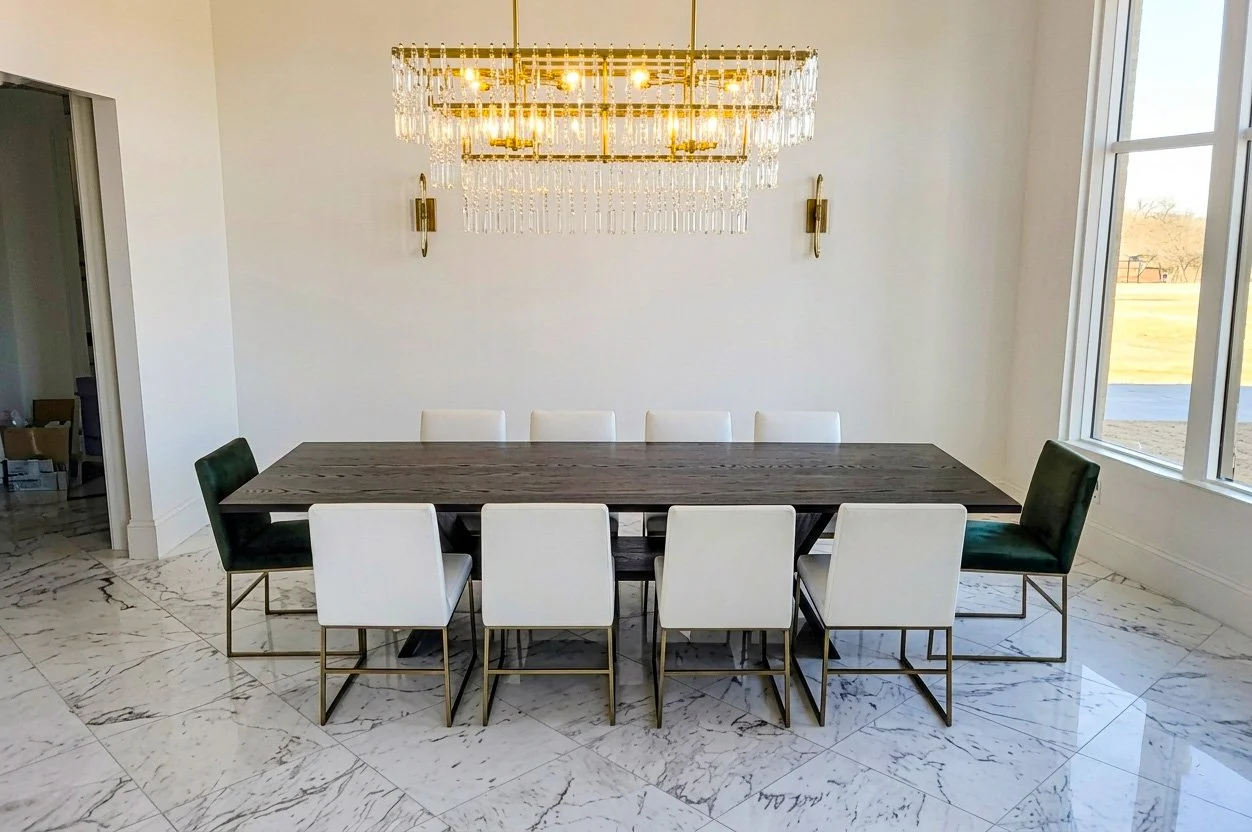
2. Styling and Detailing:
The aesthetic of your dining table should complement the overall design of your dining room. Consider the style, base design, and edge profile.
Style: From traditional and rustic to modern and minimalist, choose a dining table that aligns with your personal taste and existing decor.
Base Design: The base of your table can dramatically alter its appearance. Pedestal bases offer more legroom and a more elegant look, while trestle bases provide a sturdy and rustic feel. Leg bases are the most common and offer a classic aesthetic.
Edge Profile: The edge of the tabletop contributes to the overall style. Straight edges provide a clean and modern look, while beveled or live edges add a touch of character and organic charm.
3. Shape Matters:
The shape of your dining table sets the tone for the entire room and significantly influences flow and interaction.
Rectangular: The classic and most versatile option, rectangular tables are perfect for larger dining rooms and comfortably accommodate more people. They create a formal and traditional feel, suitable for both everyday meals and grand gatherings.
Round: Promoting easy conversation and interaction, round tables are ideal for creating a warm and intimate atmosphere. They are space-efficient, fitting well into smaller dining areas and alcoves. The lack of sharp edges also makes them a safe choice for families with young children.
Oval: Offering the best of both worlds, oval tables combine the seating capacity of rectangular tables with the soft edges and convivial nature of round ones. They bring a touch of elegance and sophistication to any dining space.
Square: For square-shaped dining rooms, a square table creates symmetry and a sense of balance. They foster a cozy and intimate dining experience, perfect for smaller groups.
4. Understanding Base Architecture
While the top provides the surface, the base provides the character. When designing for a specific space, the base type is often determined by how you plan to use the seating:
Trestle Bases: Ideal for maximizing seating along the sides, as the legs are recessed toward the center, preventing knee knocking for guests.
Four Leg Designs: Classic and structurally superior for long, rectangular spaces, offering a sense of boundary, permanence, and traditional stability.
Pedestal Bases: The best solution for round or square tables in smaller nooks, allowing for total freedom of movement for chairs and legs alike.
5. Selecting a Species for Longevity
We work exclusively with solid hardwoods because they offer a structural honesty that laminates cannot match. Your choice of wood can dictate the style and durability of the piece:
Black Walnut: Known for its deep, chocolate tones and sophisticated grain. It is the gold standard for modern, clean lined furniture that makes a statement.
White Oak: Prized for its incredible durability and neutral palette. It fits perfectly in minimalist or architectural spaces where texture is more important than color.
Cherry: A wood that evolves with you, deepening into a rich reddish brown patina over time as it is exposed to natural light.
6. The Finish: Protecting the Investment
Because we focus on solid wood, the finish must be as durable as the timber itself. We prefer finishes that sit in the wood rather than just on it. This maintains the tactile feel of the grain while providing a water resistant barrier against the realities of daily life.
A matte or satin sheen is typically recommended for custom furniture; it highlights the natural geometry of the wood without the distracting glare of a high gloss coating that can hide the true character of the material.
Bringing it All Together:
Design is the process of solving problems before the first cut is ever made. By focusing on the math of your room and the inherent beauty of premium hardwoods, you create a piece that isn't just a table, it’s a legacy.
If you have a space that requires a specific solution, the best way to start is by looking at the raw dimensions and letting the wood dictate the rest.
Once you've chosen the perfect dining table, complete the look with stylish chairs, an elegant centerpiece, and appropriate lighting. Consider layering textures with placemats, runners, and tablecloths to add depth and visual interest.
A well designed dining table is an investment that enhances both the beauty and functionality of your home. By carefully considering the shape, size, material, and style, you can choose a table that not only meets your practical needs but also becomes the focal point of your dining space, fostering connection and creating cherished memories for years to come.