How Much Does Custom Furniture Actually Cost? An Honest Breakdown
Originally Published: December 2022 | Extensively Updated: June 2026
When you walk into a typical big box retail showroom, the pricing is fixed, predictable, and stamped on a tag. But when you start exploring the world of custom, bench built furniture, those price tags seem to disappear.
If you have looked around our website at Graeber Design, you might have noticed that we don’t list flat prices next to our custom portfolios. It’s not because we are trying to hide anything or play sales games. In fact, it's the exact opposite.
I’m a builder, not a salesman. I firmly believe that high quality pieces sell themselves. Because every single client we serve in the Oklahoma City metro requests different wood species, specific dimensions, and personalized functional details, a one size fits all price tag just doesn't work.
I know you work hard for your money. That is why I have always promised my clients that I will never be like those high volume builders who tack on arbitrary markups to cover whatever. Our pricing is always calculated directly from two straightforward factors: the current market price of the materials and the actual time we put into crafting the piece. Nothing more.
To give you complete transparency before you start your next home project, let's break down what actually drives the cost of a bespoke piece of furniture.
The Three Elements That Form Your Quote
When you bring us an inspiration picture, a sketch, or just an idea for your home, your quote is custom engineered based on three variables:
1. Wood Species and Board Foot Market Pricing
We build furniture using premium, solid hardwoods that are native to North America or sustainably sourced. Unlike industrial particleboard, the price of real lumber fluctuates based on the global and regional market.
The type of tree you choose heavily influences the raw material cost:
Tier 1 (Accessible Hardwoods): Species like Red Oak are highly durable, readily available, and offer a fantastic balance of strength and value.
Tier 2 (Premium Hardwoods): Woods like Cherry and Mahogany require more selective harvesting and specialized milling, which increases the material investment.
Tier 3 (Luxury Woods): Both deep, rich Black Walnut, and White Oak, and especially Rift Sawn or Quarter Sawn White Oak remain the industry favorites for their striking grain patterns and natural color, making them premium luxury wood selection.
2. Physical Dimensions and Scale
It sounds obvious, but a 10 foot dining table meant to host extended Oklahoma family gatherings requires significantly more board-footage and structurally robust joinery than a 6 foot breakfast nook table. The thicker the tabletop profile (e.g., a substantial 1-3/4 to 2-1/2 inch top vs. a standard 1 to 1-1/4 inch top), the more raw material must be sourced and prepared.
3. Design Complexity and Internal Engineering
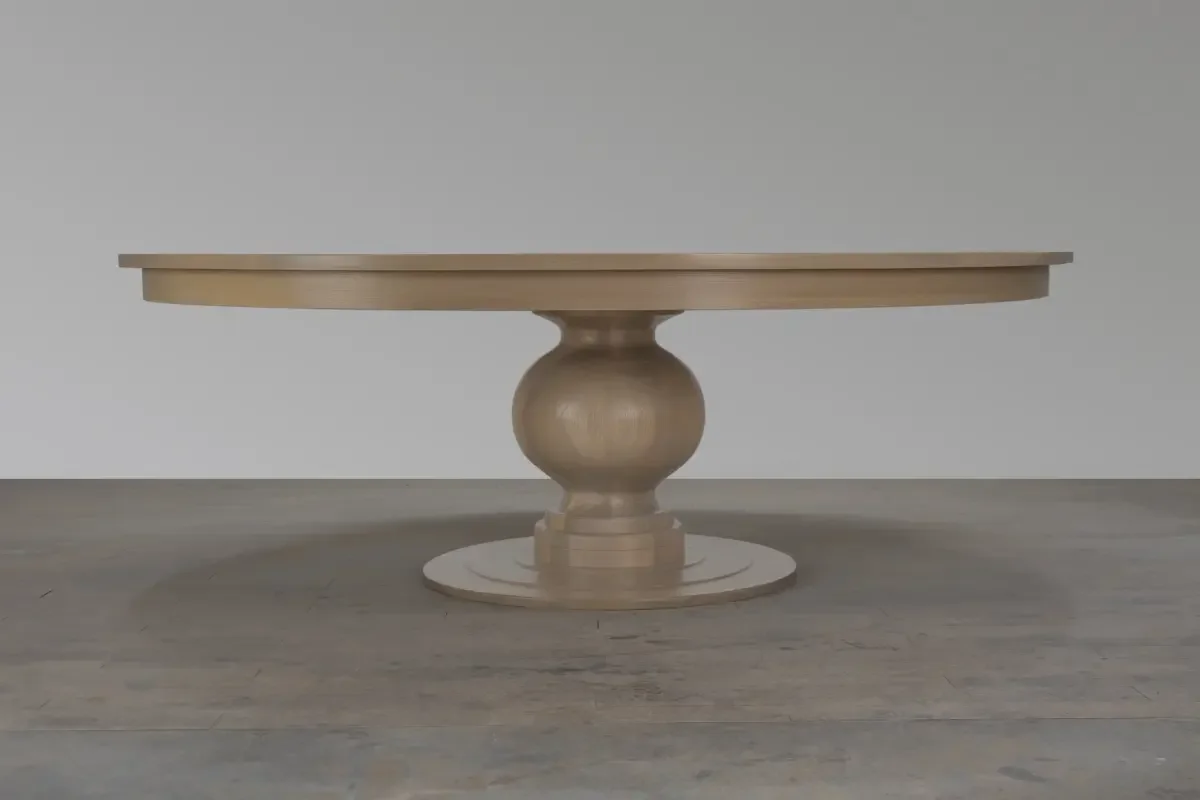
The final cost reflects the hours of master labor required to execute your design. Clean, minimalist lines or simple panel legs take less time to construct than complex architectural bases, hand turned legs, or specialized storage features.
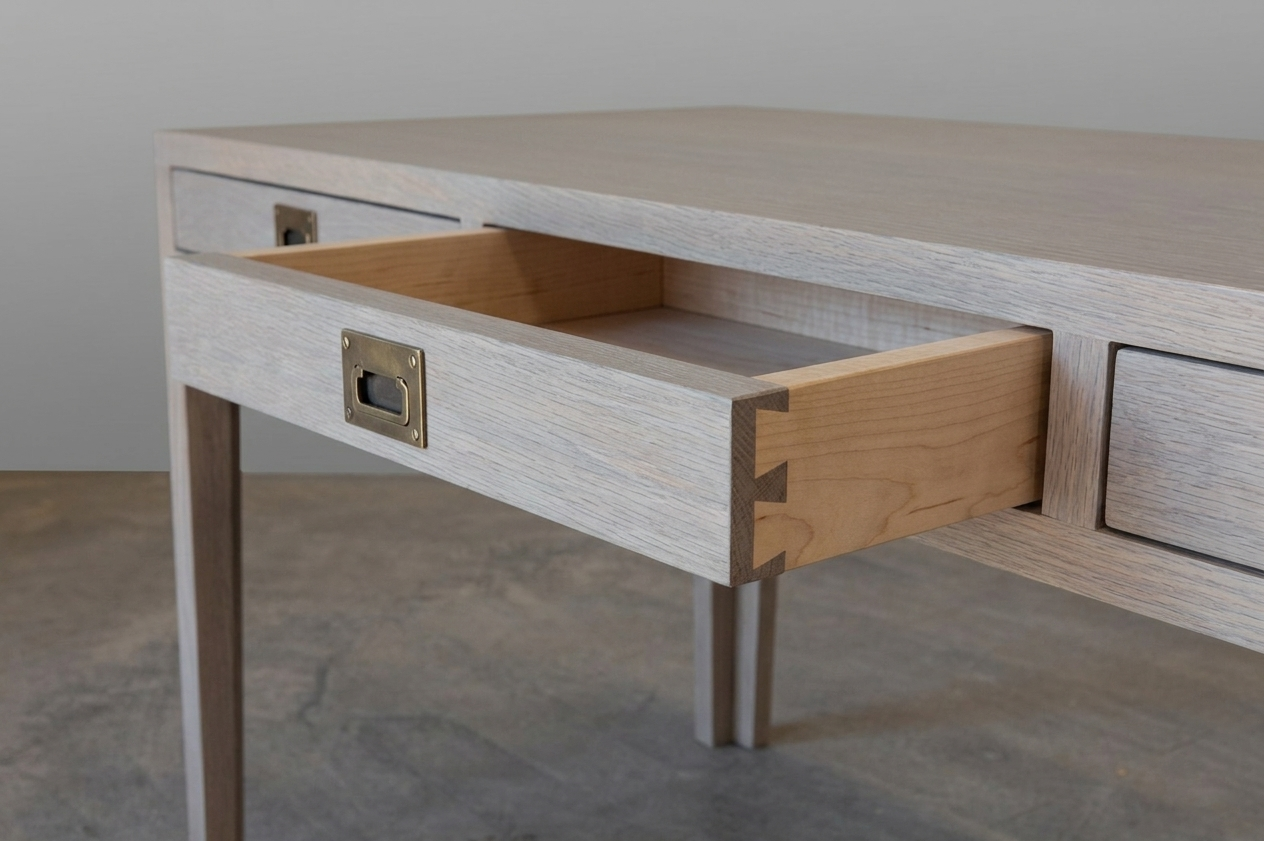
Adding intricate functionality, such as hidden cable management pathways, soft close undermount or dovetailed drawers, built in wine racks, or custom matched stain finishes, requires specialized setups and dedicated bench time from our craftsmen.
Evaluating the Cost Per Use Investment
Yes, solid hardwood furniture carries a higher upfront price tag than mass produced alternatives. However, looking at the investment through the lens of longevity completely flips the math.
Consider a high traffic item like a custom dining room table or a living room media console:
The Mass Produced Cycle: A standard $1,000 retail table made of particleboard and thin veneers typically lasts 3 to 5 years before the edges chip, the surface scratches permanently, or the joints begin to wobble under real world use. Over twenty years, you will likely replace that table three or four times, spending thousands of dollars on pieces that end up in an Oklahoma landfill.
The Custom Investment: A solid wood table handcrafted at our Edmond shop is built for real family living and is guaranteed for life. Because it is solid wood, it can be sanded, refinished, and restored decades down the road if your style changes.
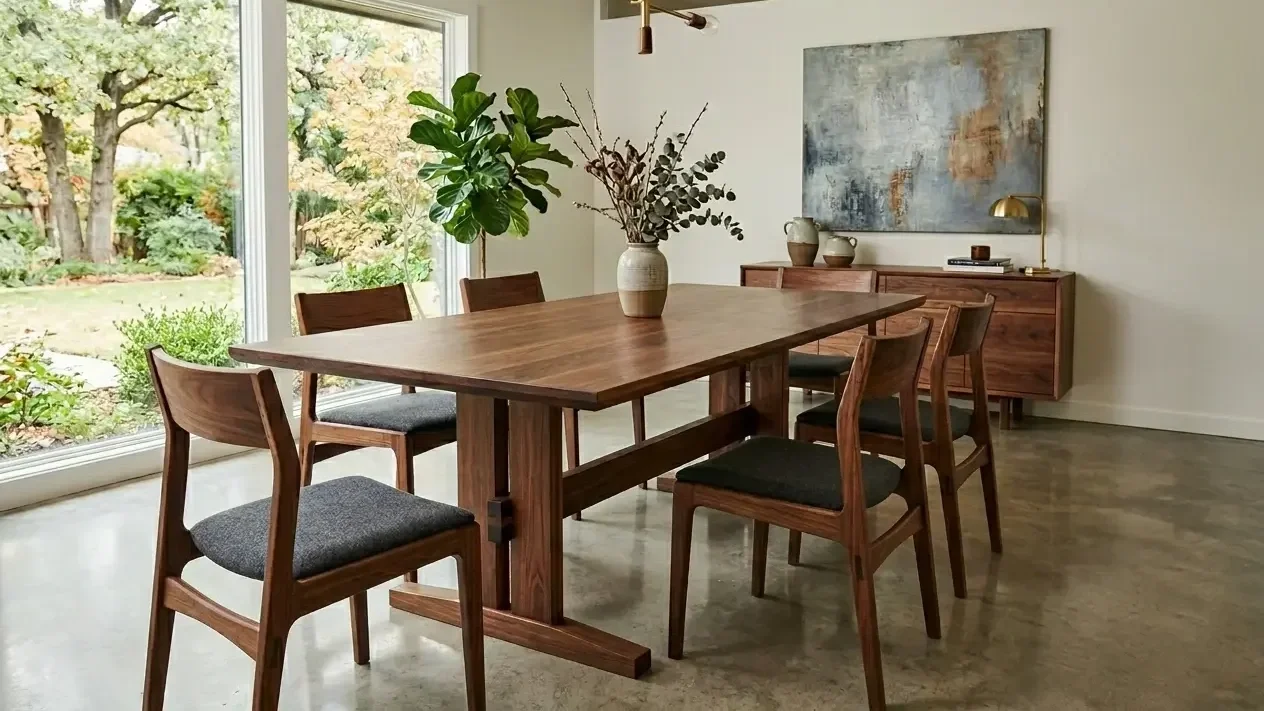
When you break down the purchase over forty or fifty years of daily use, custom furniture becomes remarkably affordable. You aren't buying a temporary asset; you are investing in a future family heirloom.
Get a Quick, No Pressure Quote
We don't believe in high pressure sales tactics or hidden fees. If you have an idea in mind, a specific dimension you need to fill an awkward wall space, or a picture of a style you love, we want to help you figure out what it takes to build it right.
In most cases, we can run the material math and provide you with a clear, honest quote with different structural options within just a few minutes.
Our collaborative process is entirely simple:
1. Consultation: We discuss your specific space, lifestyle needs, and design tastes.
2. Design: We select the exact dimensions, wood species, and structural details together.
3. Build: Your piece is carefully handcrafted and finished by hand right here in our Edmond shop.
4. Delivery: We bring the finished piece directly to your home and place it perfectly in your room.
Your home deserves pieces that are built specifically for you.
Contact Graeber Design today to request your custom design consultation.